Disclaimer: it's always safest to consult with your primary care provider before beginning
exercise or making lifestyle changes.
Your Feet Are Foundational.
Most shoes are
quietly
undermining your foundation in ways that can take years to undo. While you've probably been told that
your feet need
constant support, the truth is that most modern footwear often ends up restricting, weakening, and
deforming the shape and
function of your feet.
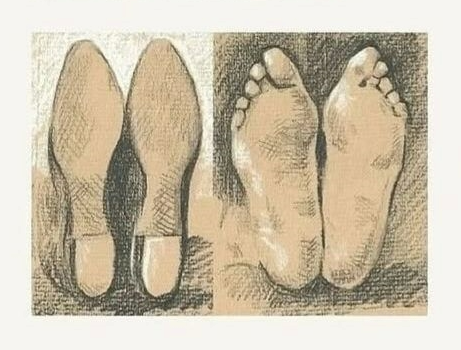
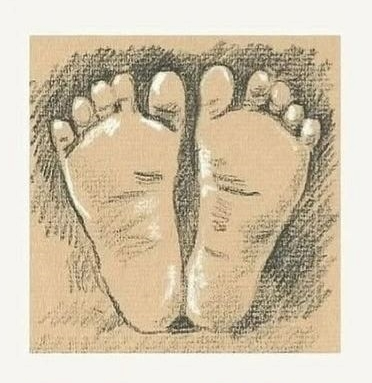
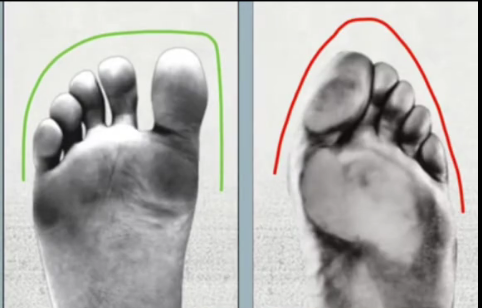
Shoe Feet
Natural Feet
Think of your body like a house - if the foundation cracks, everything built on top
of it begins to compensate.
Poor
foot function then travels up the body, and can lead to repeated injuries, knee and hip
pain, sciatica,
tendon problems, pelvic and core dysfunction, a body that adapts poorly to daily movements and
activities, and ultimately compromise the structural integrity of your entire body.
That's why reclaiming natural foot function matters so much, and why understanding what "better" footwear
actually means, might be one of the best investments
you can make for your
movement, resilience, and independence later in life.
What's actually happening inside a conventional shoe.
Think about what your foot is being asked to do - or rather, not do - inside a typical shoe. Your toes are compressed together so they can't spread or grip. The sole is thick enough to block most of the ground's texture, cutting off the sensory information your nervous system depends on to regulate your balance and movement. The sole is rigid enough to prevent all of the muscles and joints in your foot from being asked to move, flex, or adapt - so they stiffen and weaken over time - and that strain is forced further up your body. Even a slightly raised heel shifts your center of gravity and reshapes the tension through your calves, hips, pelvis and spine. A curved-up front holds your toes off the ground and strains the tissue running along the bottom of your foot. Fit also matters - if the shoe is loose, your toes spend all day gripping just to keep it on, and over time that gripping pattern becomes your default.
None of this is dramatic in the moment. It's the eight-hours-a-day, years-on-end accumulation that does the real damage. What starts as a subtle shift in your foot becomes a pattern that travels up through your entire body and gets deeper with every passing year.
◆ ◆ ◆
01Part One
Signs your footwear is hurting you
First, look at your feet and your shoes
Your body and your shoes leave clues. Here are some of the most common signs that mean you might need to
reassess your footwear and get particular muscles firing again.
If you recognize even one of these, read this guide carefully.
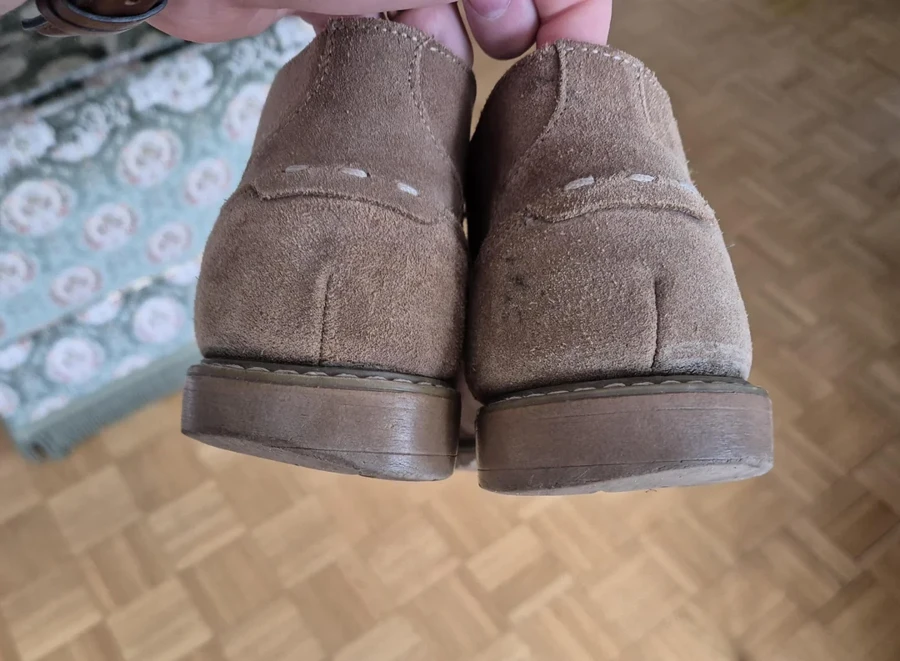
Uneven sole wear - your gait is leaving a record.
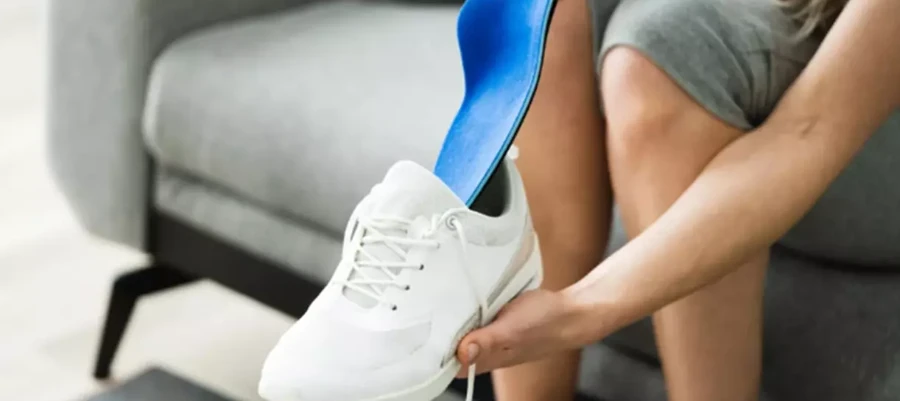
Relying on corrective insoles.
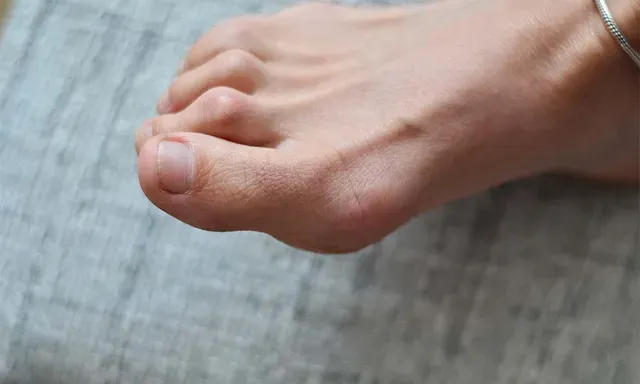
Crinkled toes and hammertoes.
Squished, compressed toes vs. naturally wide toes.
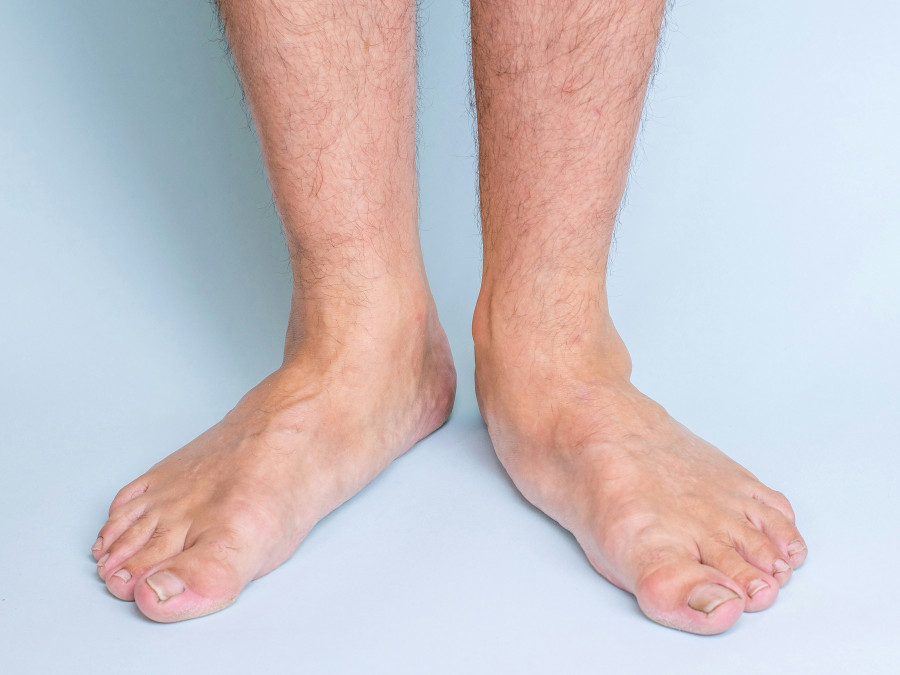
Flat feet / fallen arches.
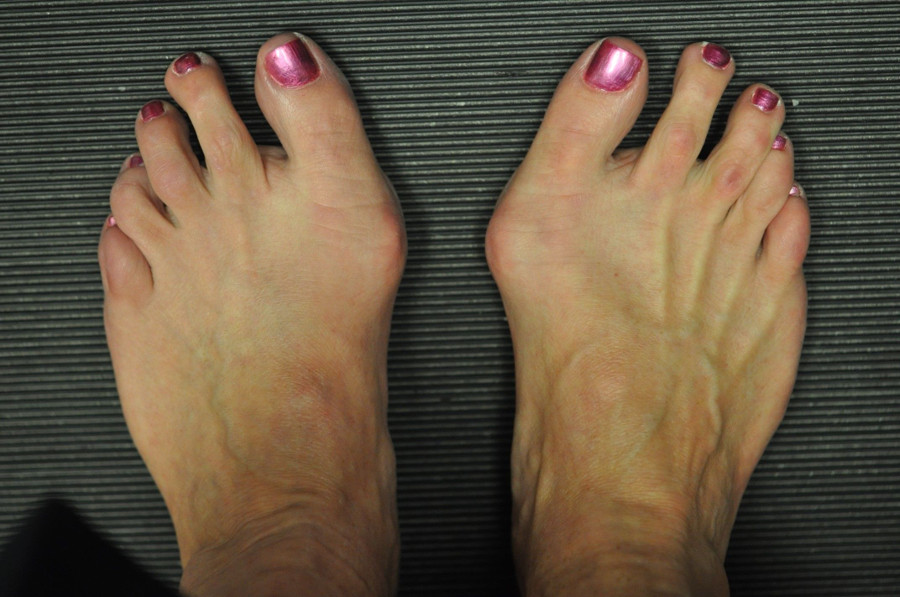
Bunions.
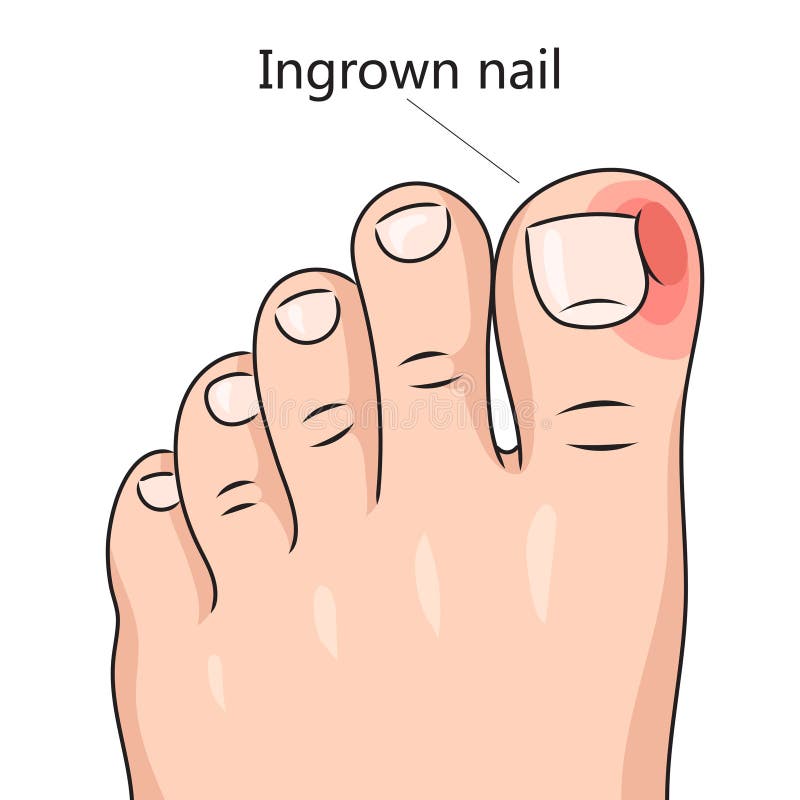
Chronically ingrown toenails.
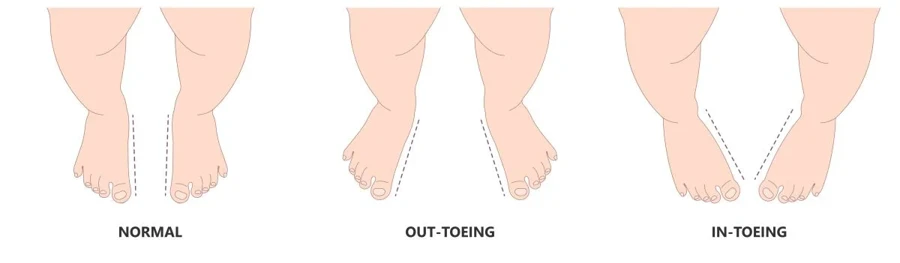
Duck-footed walking - toes pointed out.
Neutral vs. out-toeing vs. in-toeing gait patterns.
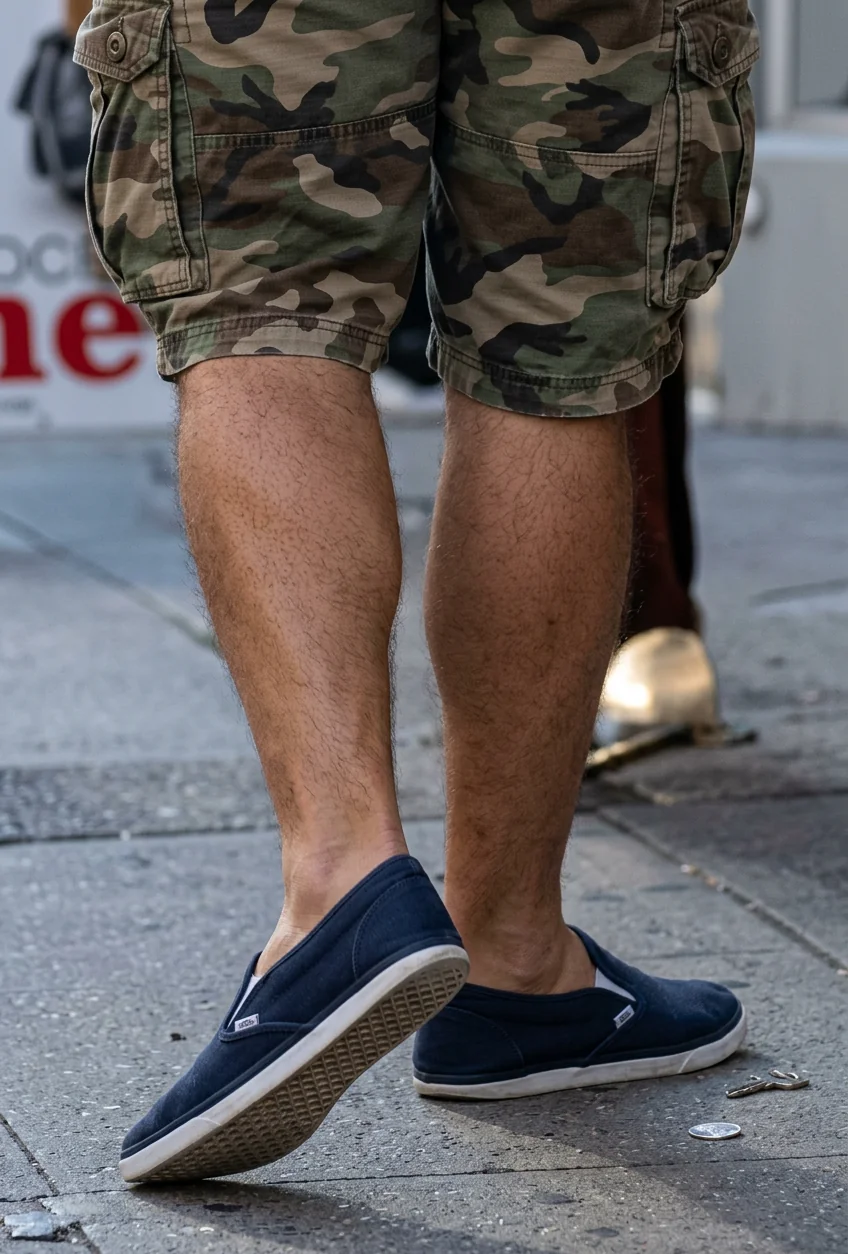
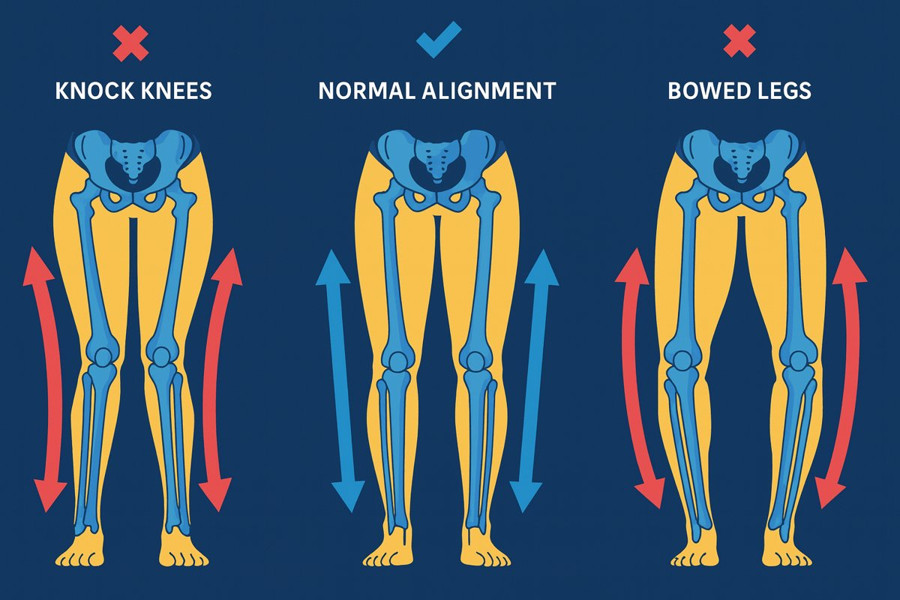
Knock-kneed, neutral, and bow-legged alignments compared.
Aren't bunions just genetic?
No, not quite! Genes can create a predisposition, but environment - especially footwear - is what actually triggers bunions to form. So a family history doesn't mean you're stuck with them; it means you need to take extra care of your feet, and the sooner the better.
You may not be able to reverse bone overgrowth without surgery, but you can absolutely stop bunions from forming and prevent them from getting worse, and improve your toe positions - which can make a huge difference in comfort and function!
So if you have bunions (or a family history) then this guide is especially for you.
Be mindful of corrective insoles and Orthotics
Corrective insoles do not restore foot function, and in many cases should only be used
temporarily.
In fact with time, they will instead prop up dysfunction while your feet get
weaker, duller,
more
deformed, and less capable. If your feet cannot load, spread, feel, and adapt on their
own,
covering
that up with more artificial support is (at best) just a bandaid solution. You CAN see real
change if
you work on restoring your feet themselves.
So if you're currently relying on orthotics, this guide is also especially for
you.
◆ ◆ ◆
02Part Two
What functional footwear looks like
How to assess and shop for shoes
Whether you're looking for boots, work, dress, running or casual shoes, start looking for lines that
mention "barefoot" or "minimalist". This style is becoming more and more popular, with
more and more companies introducing their own barefoot versions of a wide
variety of
traditional footwear.
Take this functional footwear checklist with you
Feature
What to Avoid
What to Look For
Why It Matters
Toe Box
Narrow, pointed toe section.
Foot-shaped shoe - widest point at the toes.
Your toes are supposed to spread and grip the ground. A narrow toe box shuts that down.
Cushioning & Sole Thickness
Thick cushioning or heavily textured sole.
Thin & low-texture sole.
You might have been told that cushioning is supportive, but it actually creates
instability and cuts off the sensory feedback your brain needs to make proper
biomechanical adjustments. A thin, low-texture sole gives you better ground feel.
Heel Height
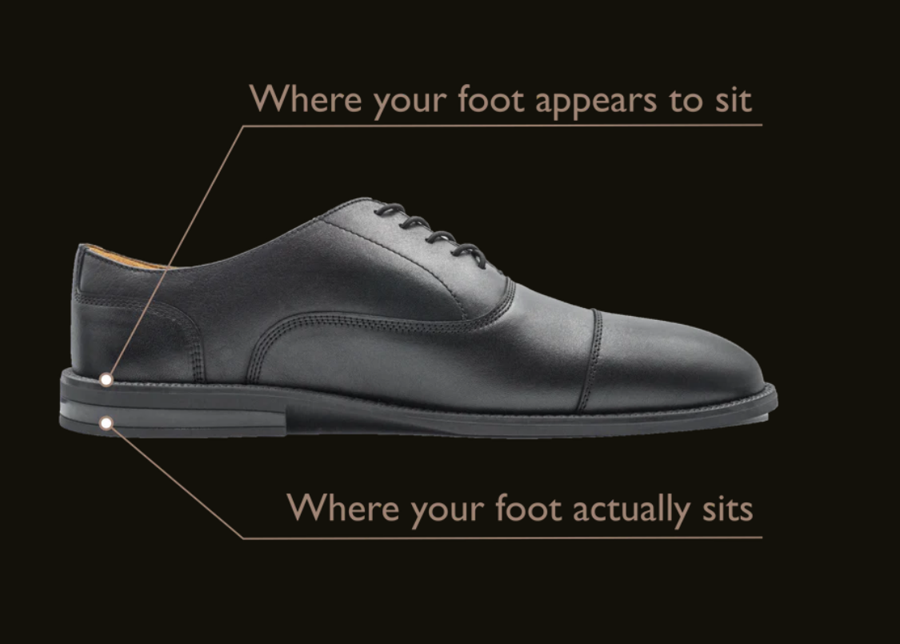
Anything with elevated heel, incl. men's dress shoes, raised-heel
sneakers or runners.
Flat / zero-drop, "faux heel" shoe
A raised heel might seem subtle, but it changes your ankle mobility and shifts your
whole alignment. Going flat lets your ankles and calves work the way they're supposed
to.
Sole Flexibility
Rigid sole that restricts natural foot movement.
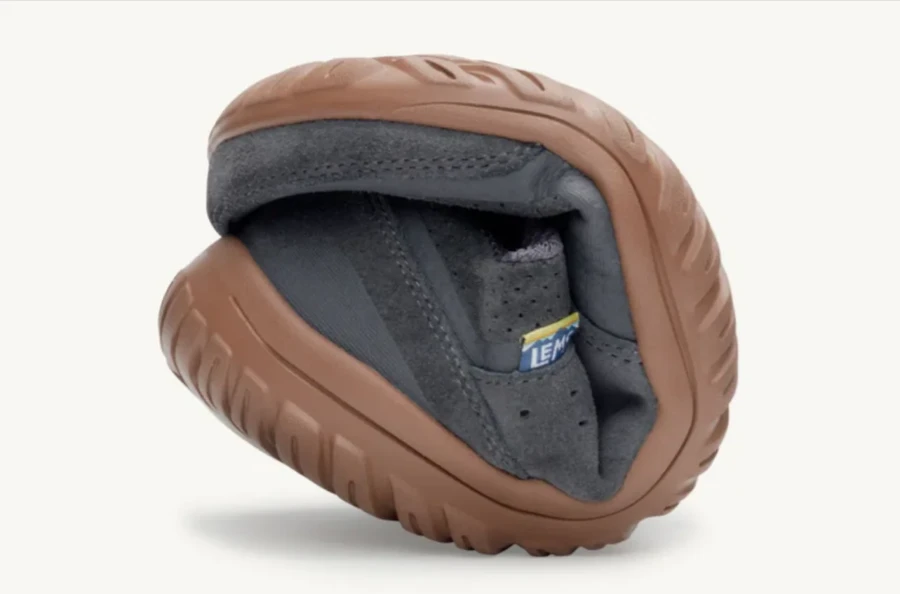
Completely flexible shoe - bends, folds, and twists in all
directions.
A stiff sole essentially puts a cast on your foot. Over time, the muscles and joints
weaken because they're not being asked to do anything. A completely flexible shoe lets
all those small muscles and joints stay active and adaptable, so your foot can actually
do its job.
Toe Lift
Upward curve at the front of the shoe (toe spring).
Flat forefoot with little to no upward curve.
Toe spring might look minor, but it pulls your toes up off the ground constantly,
straining the tissue along the bottom of your foot and up through your leg. You want a
shoe that sits flat so your toes can function properly.
Fit & Attachment
Loose fit.
Properly fitted shoe, securely attached.
Loose footwear forces your toes into a constant gripping pattern just to keep the shoe
on. Over time, that rewires your gait. Make sure whatever you wear is snugly attached.
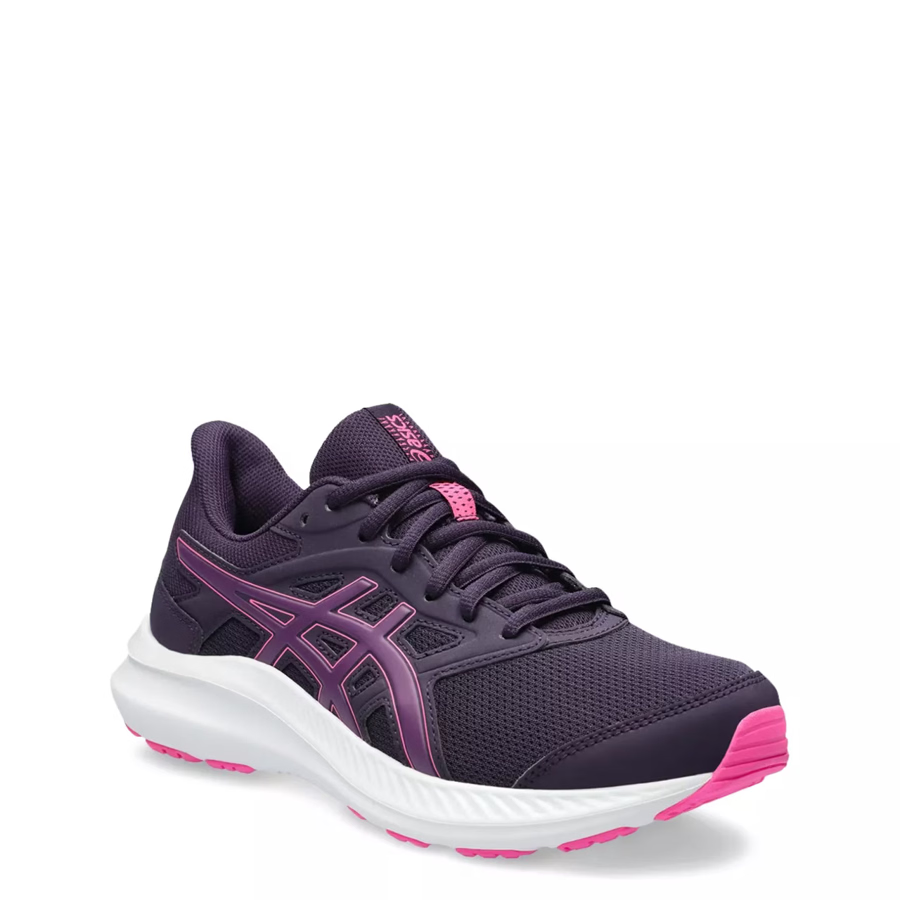
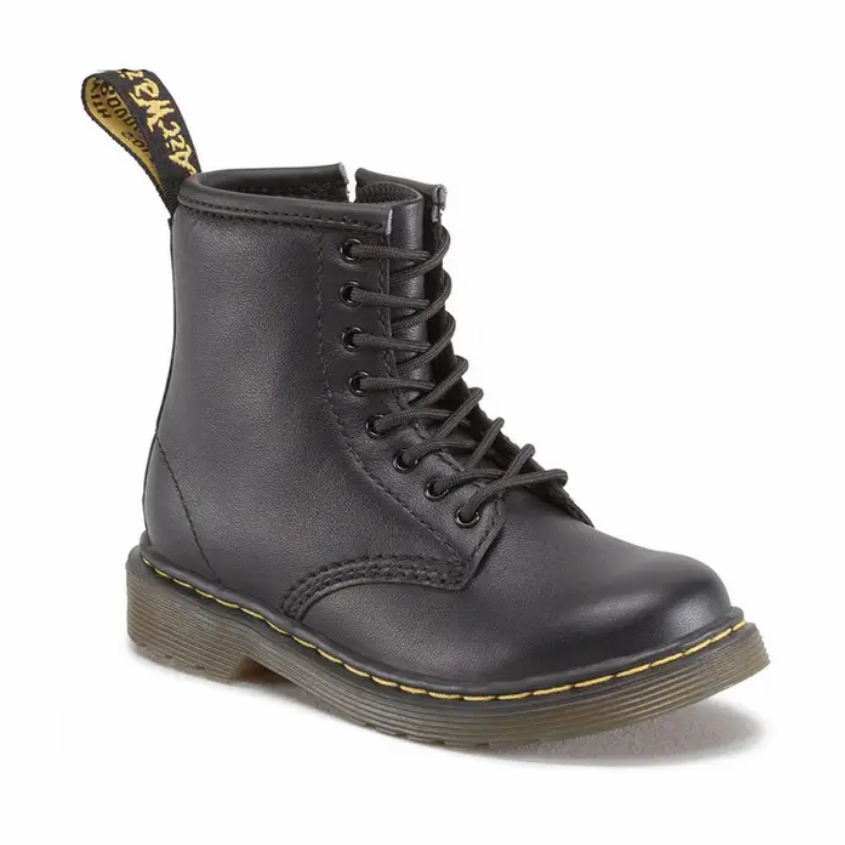
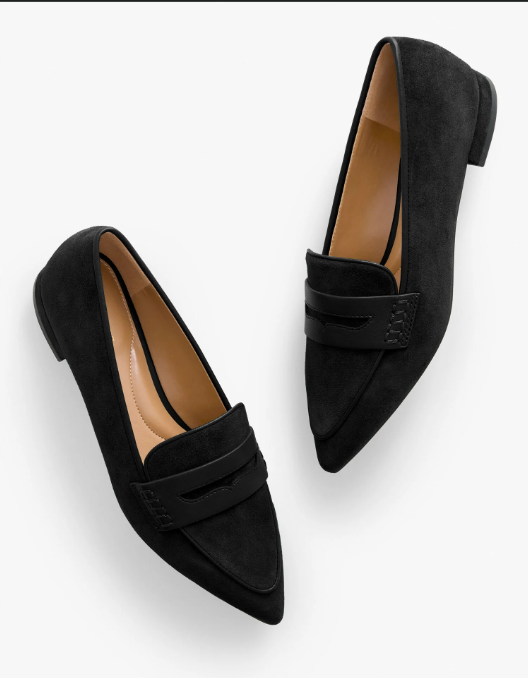
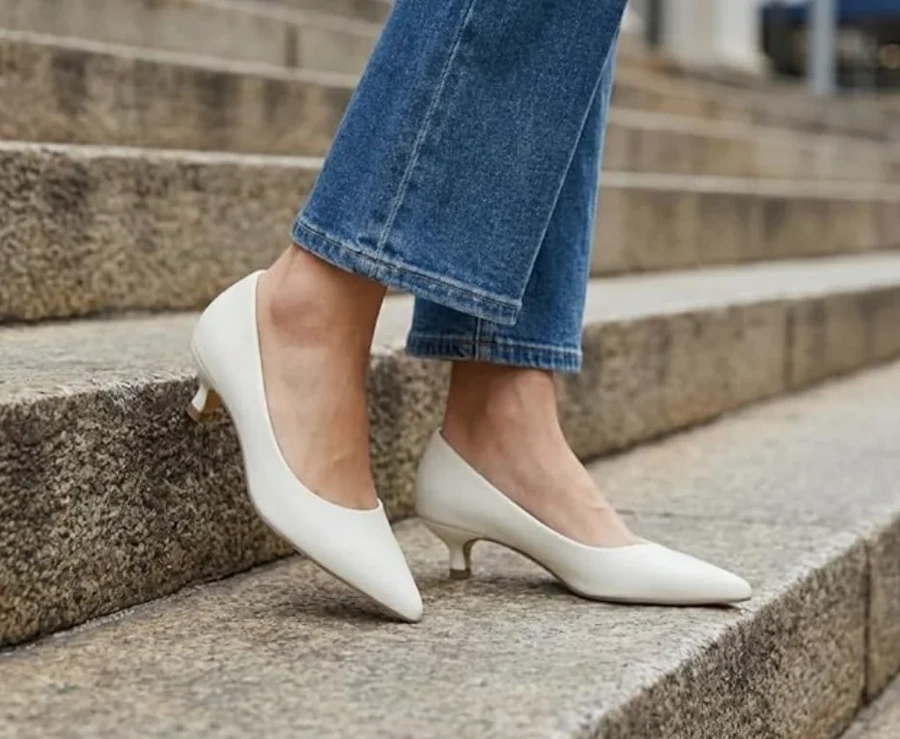
Common footwear that causes problems:
You don't have to give these up completely, but you should only wear these for "special occasions," not as
a daily thing. They might look and feel a certain way, and
it's totally fine to wear these now and then, but not on a daily basis.
Common misconception: Most people assume
their shoes are fine because they feel comfortable. But comfort in a shoe doesn't always mean function
- often it actually means your foot is being propped up, padded, and immobilized so you don't notice what's
going wrong underneath.
For healthy foot function, the soles of your shoes MUST be flexible.
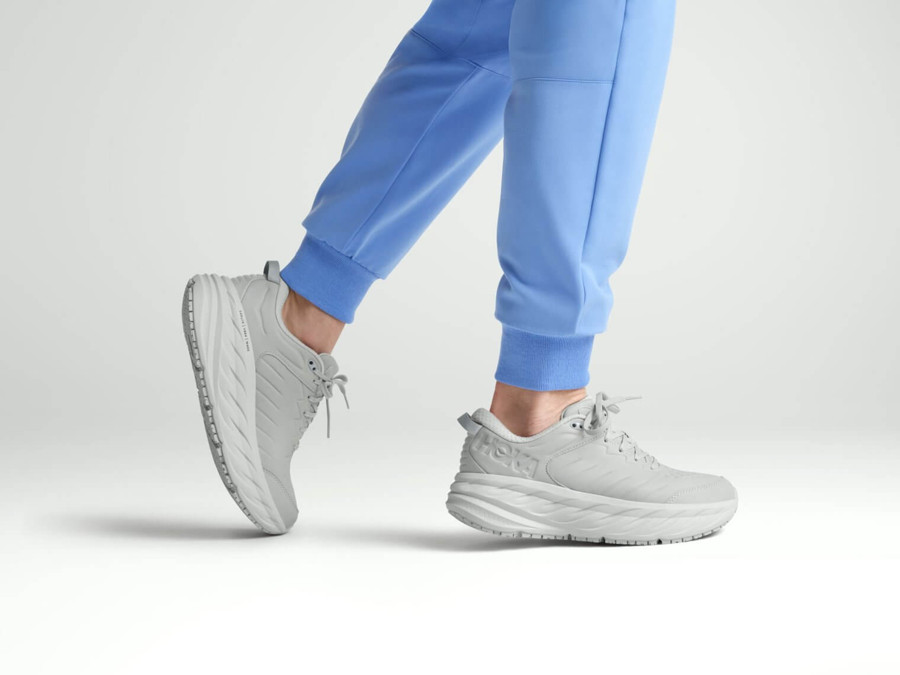
If you are working a job that requires you to be on your feet for long hours on
very hard surfaces, there are shoes with thicker, more cushioned soles that are still wide enough and
highly flexible enough to improve your foot function.
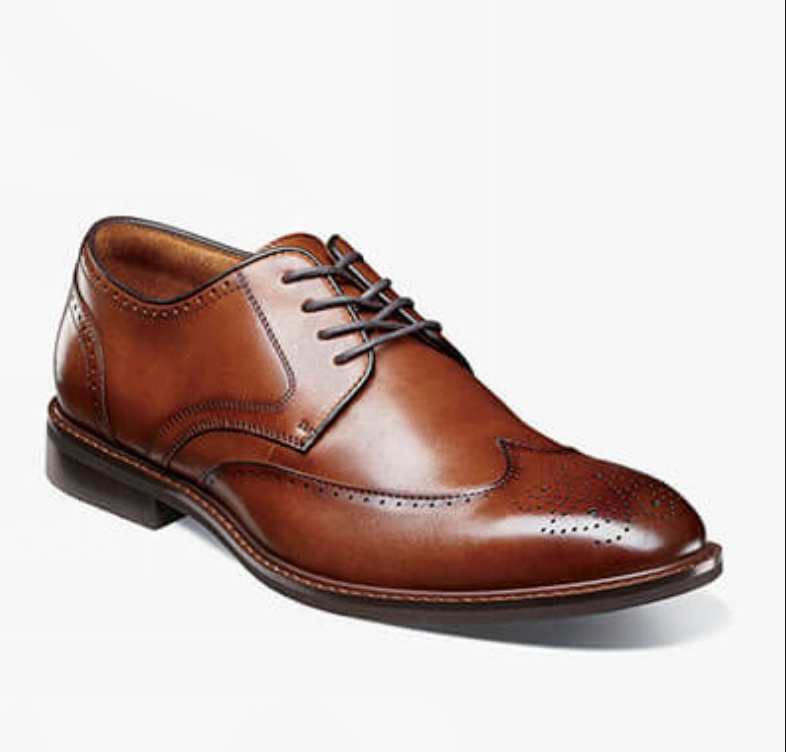
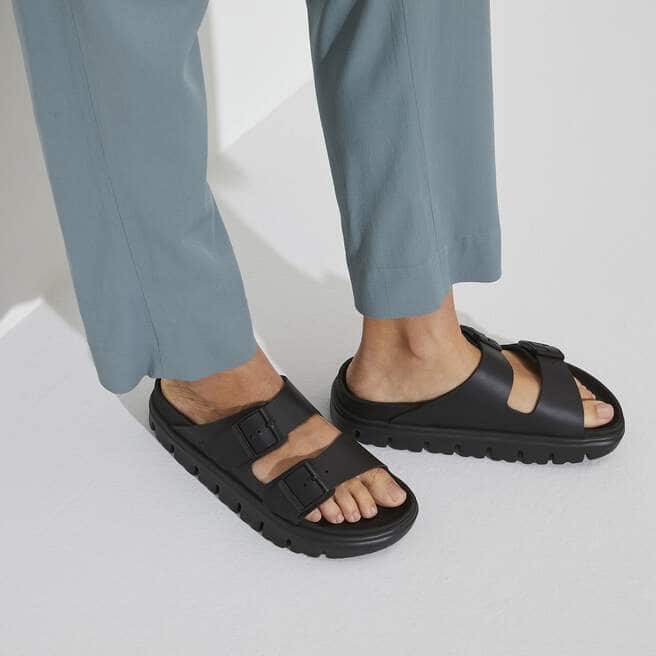
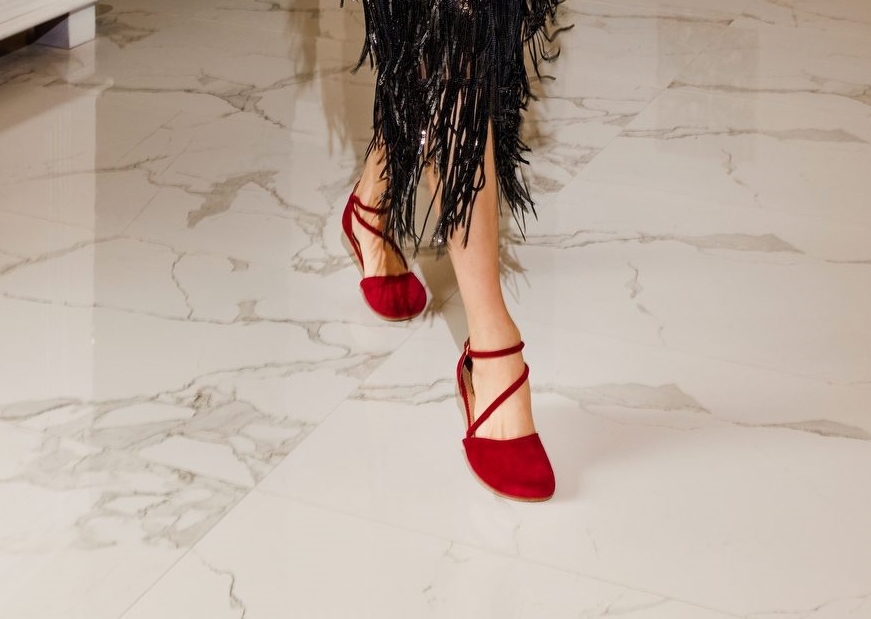
These rules apply not just to high heels, wedges, and platforms, but also
conventional men's dress shoes, which not only carry more heel than most people ever notice, but break every other rule on the list.
But you don't have to sacrifice fashion for function!
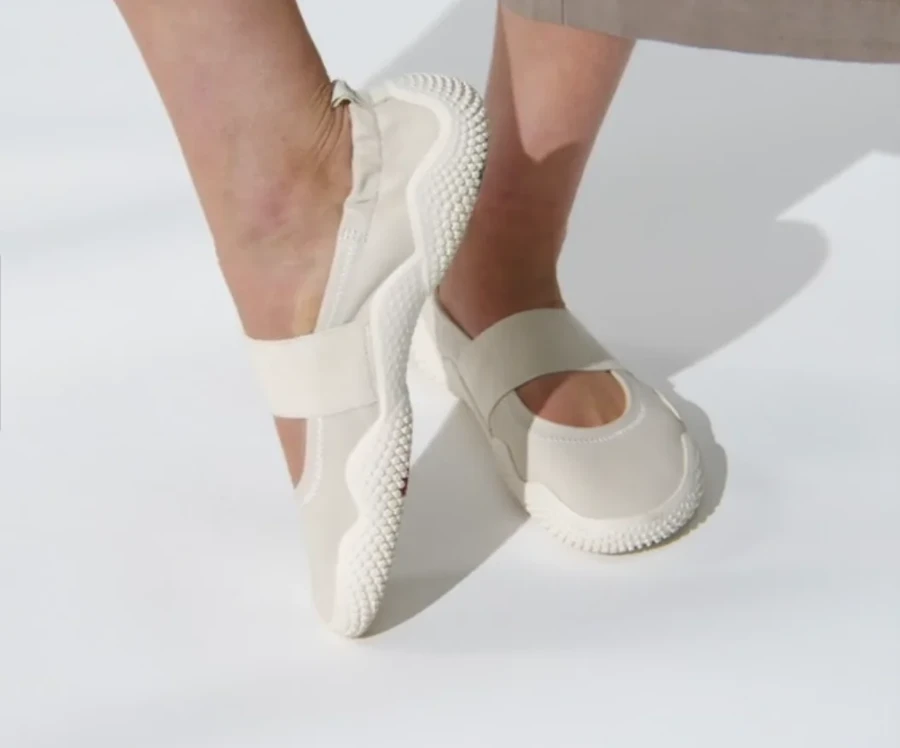
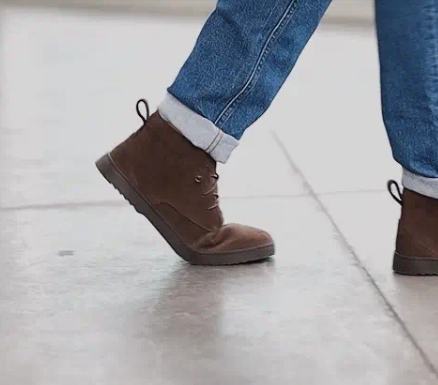
A flat sole doesn't have to mean a casual shoe. Some brands are increasingly making
work and dress shoes,
boots, and formal wear that check every item on
the checklist - and even CSA certified work boots that meet many of them.
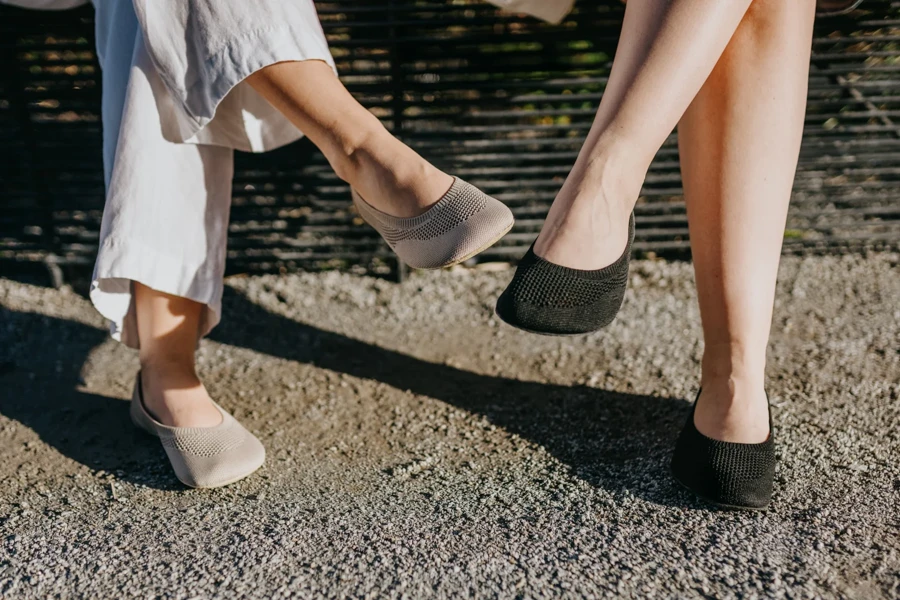
"Faux-heel" minimalist dress shoe
Minimalist formal wear
And if you really can't avoid them
If for some reason you must wear restrictive footwear and/or can't change that, do
whatever you can, as often as
you can, to give your feet what they actually need. Here's what I'd recommend:
Whatever shoes you end up buying - work, casual, anything - try to check off as many items
from our
checklist above as possible. Even if it just hits a few, it's better than none.
Get out of them often, and switch into flat, natural footwear whenever you can.
Double down on foot and lower-leg care. Walk barefoot outside often, use regular
self-massage, and
make use of toe spreaders - read Part 3, and also check out the Complete Home Gym guide (both down below)
start
working with
a functional movement coach early.
Brands worth looking into
This kind of footwear requires good craftsmanship, so it's best to stick with brands that
have a good track record of making high-quality minimalist/barefoot shoes.
Disclaimer: I am not affiliated with any of these companies and do not receive a single cent
for
suggesting them. These are just the brands I trust.
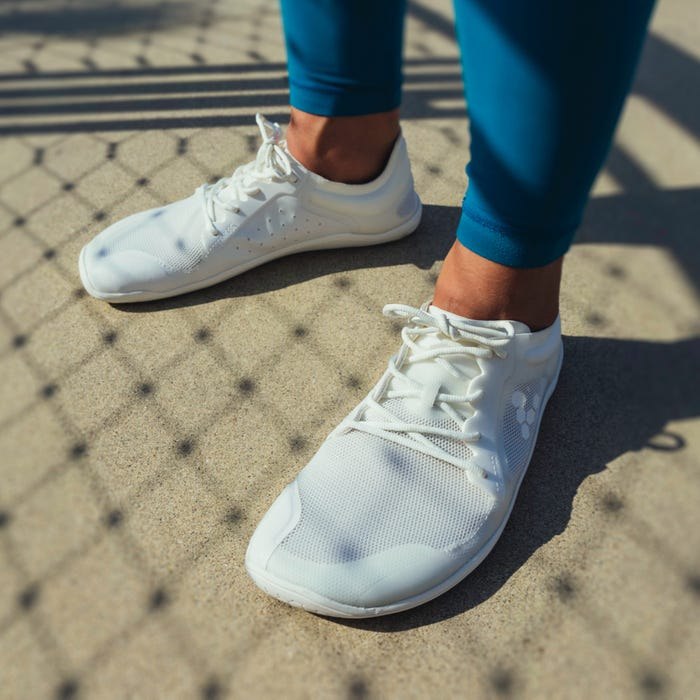
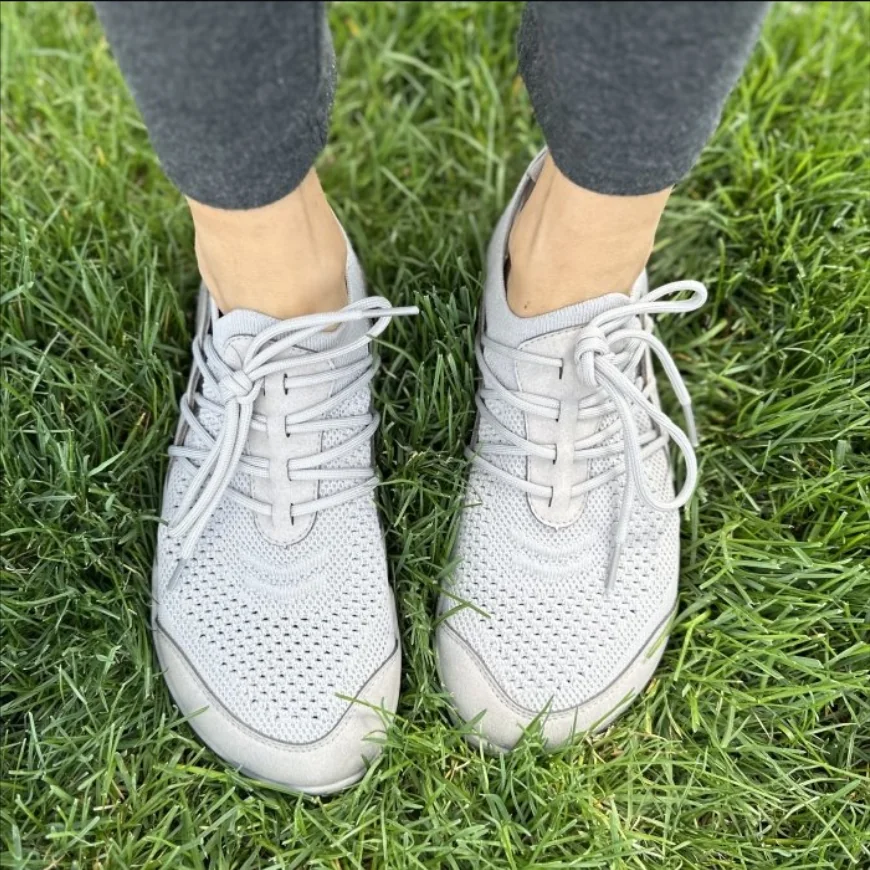
What I'm wearing
Vivobarefoot
Wildling
Vibram
Ahinsa Shoes
Some of these, like Vivobarefoot and Ahinsa, offer professional work and dress
shoes and boots that might be
worth
looking at if your job or lifestyle demands them.
◆ ◆ ◆
03Part Three
Take the transition slowly
If you've been wearing the wrong kind of shoes for years, your feet have likely become stiff, weak, and
sensitive. Do not rush this.
It's always safest to start smaller than you think and build up very gradually. Here are a few
guidelines:
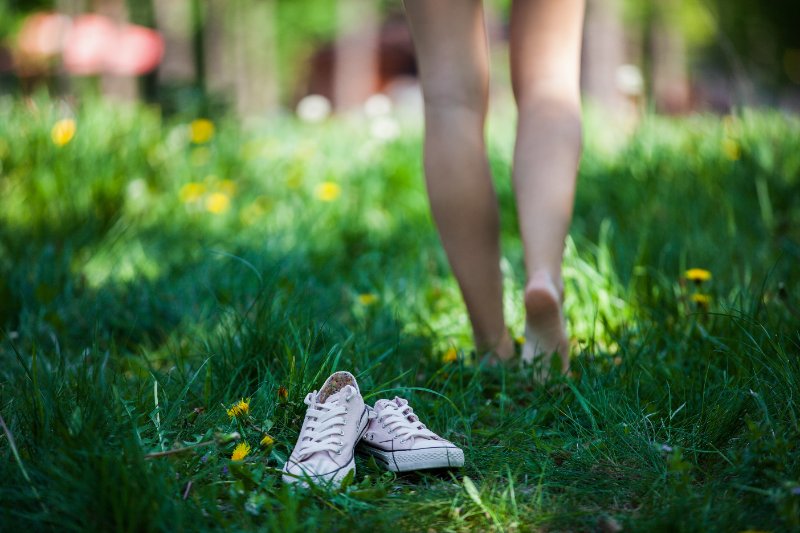
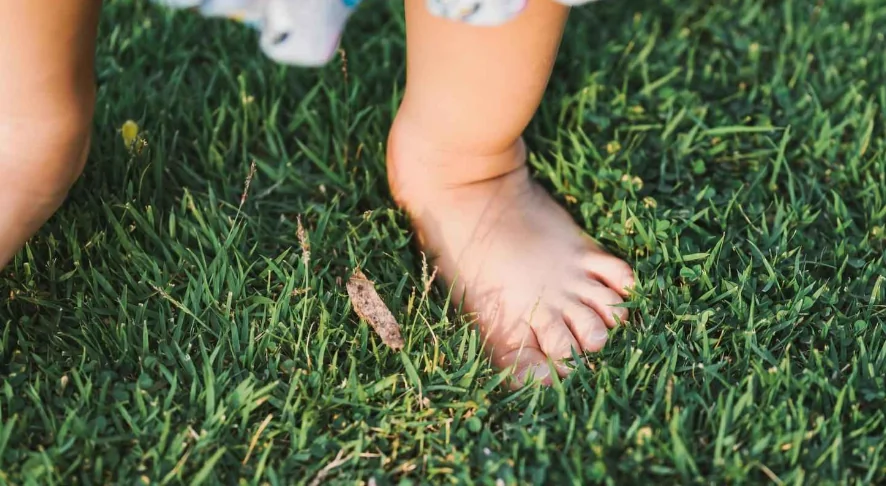
Spend time completely barefoot at home, on grass, other natural surfaces.
Take a short walk in your new natural footwear a few times per week, and notice how your
body
reacts.
If there is pain, mix in local massage to your routine (see our Home Gym guide for
tools!).
If your joints, feet, knees, or hips feel reactive to the change, scale back and work up
more
slowly.
Build foot strength at home
You don't need an expensive gym setup to build foot strength, flexibility,
and function. A great routine
focuses on sprinkling positive work throughout your day.
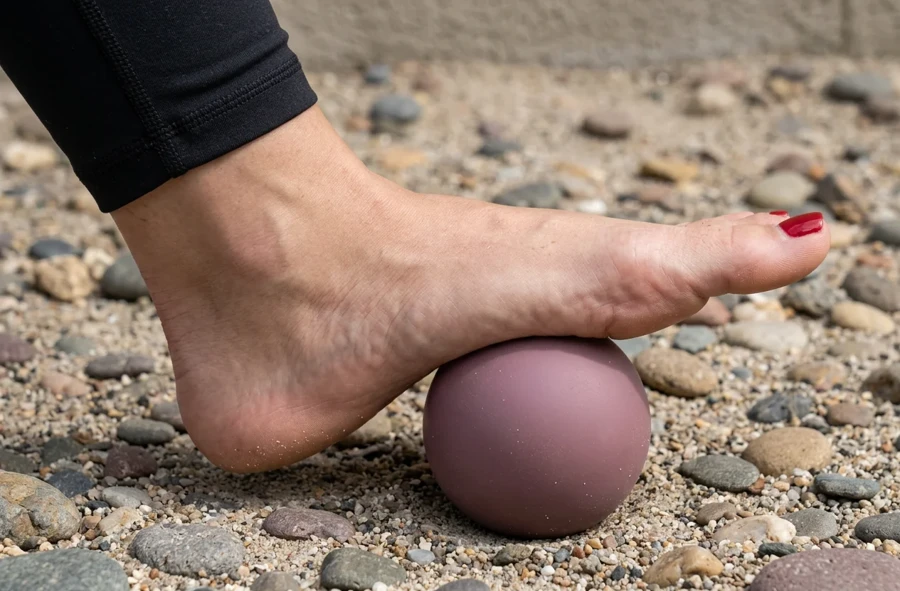
Rolling the sole of your foot on a massage ball.
Daily habits that add up
Massage your feet and legs on sore and tender spots - make good use of massage balls.
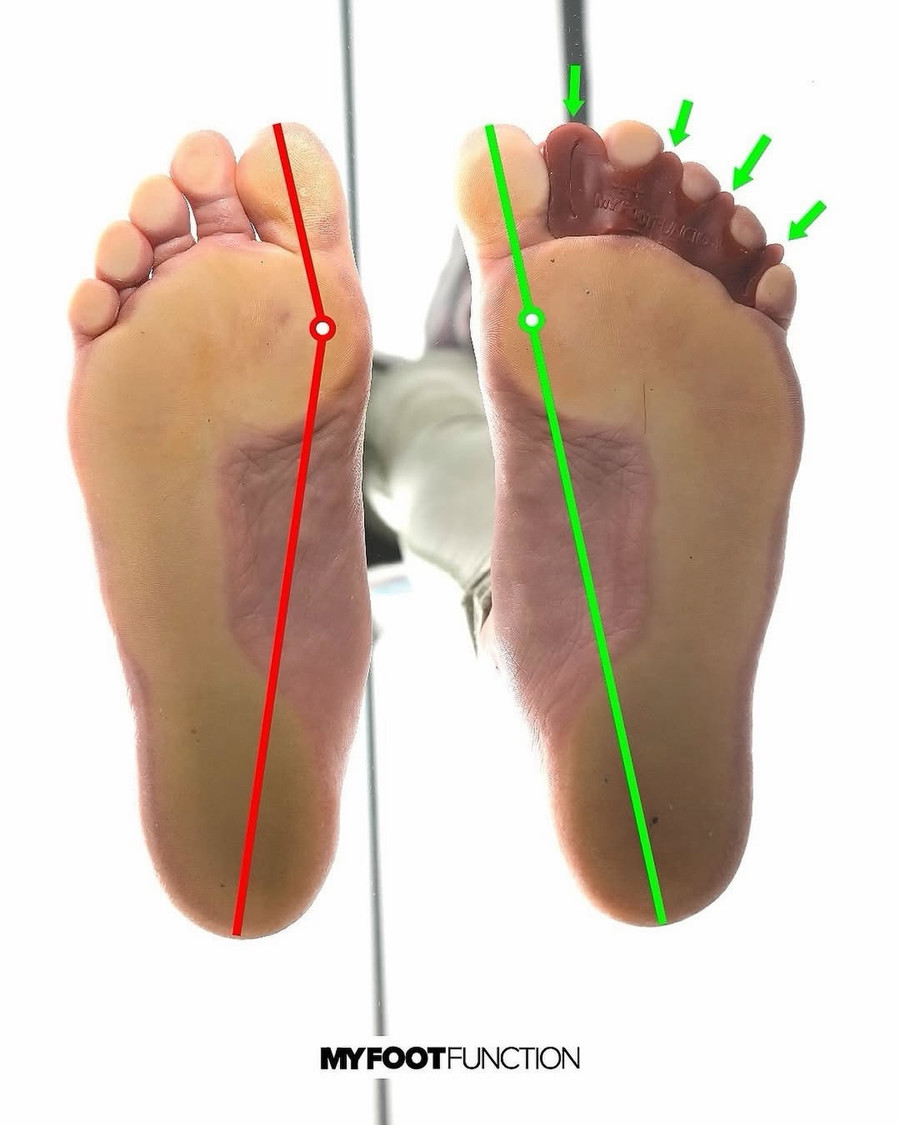
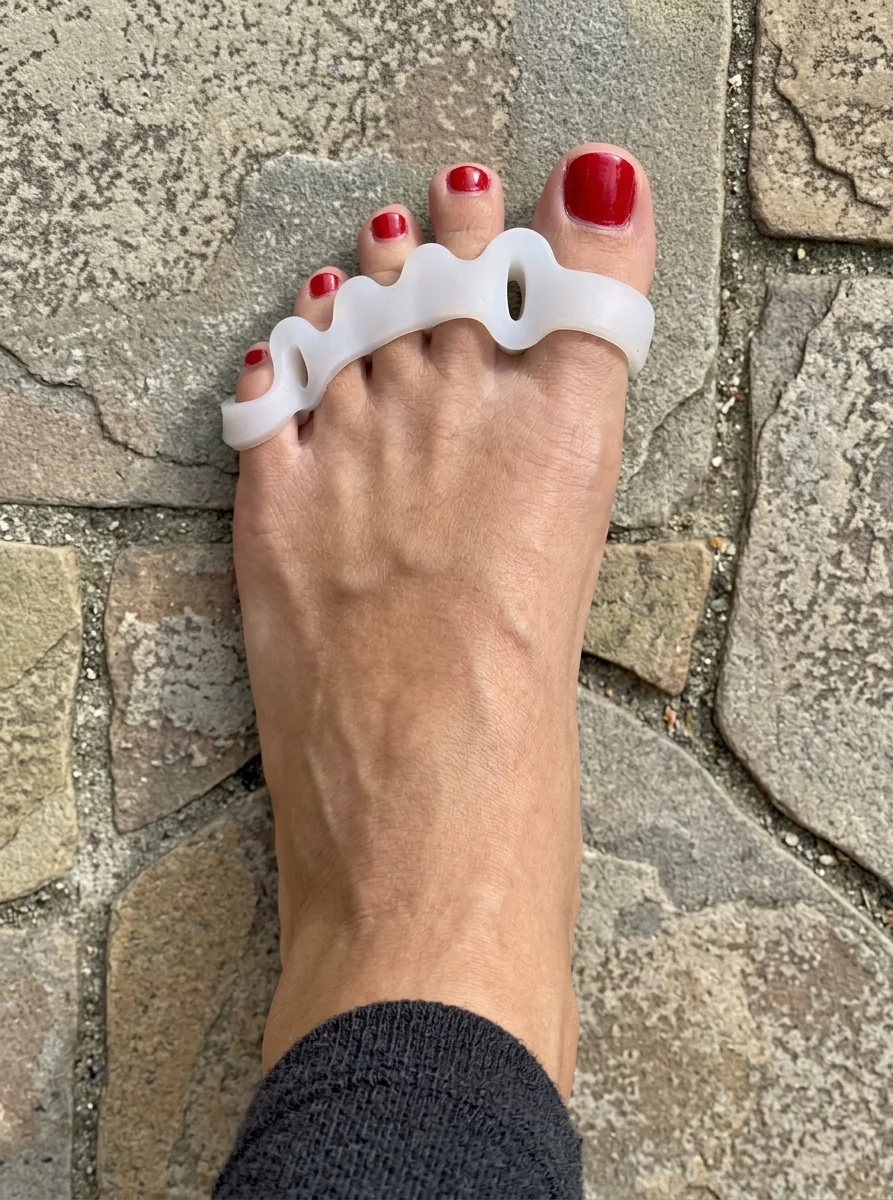
Splay your toes
and give them plenty of opportunities to move and stretch; silicone toe spreaders restore their
natural, wide alignment, and help bring focus to the area during activities.
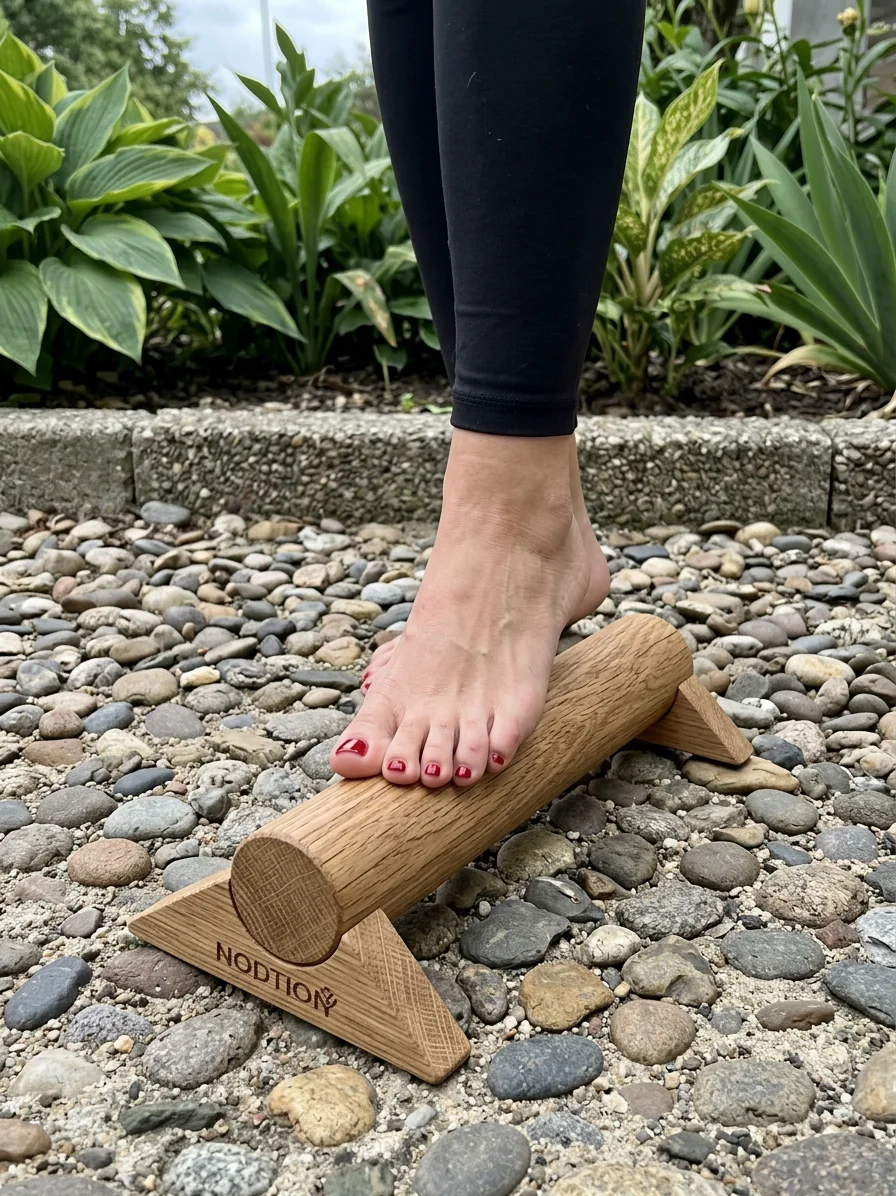
Experiment with a balance beam, and explore
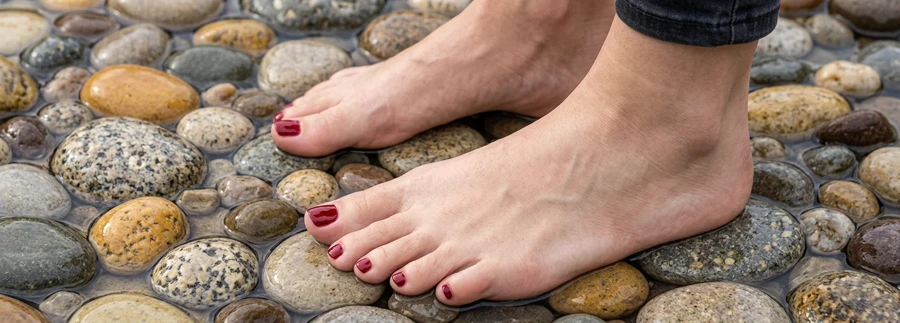
different textures and terrains with your bare feet whenever it's safe to do so.
Walking on stones, gravel, and varied textures.
Silicone toe spreaders.
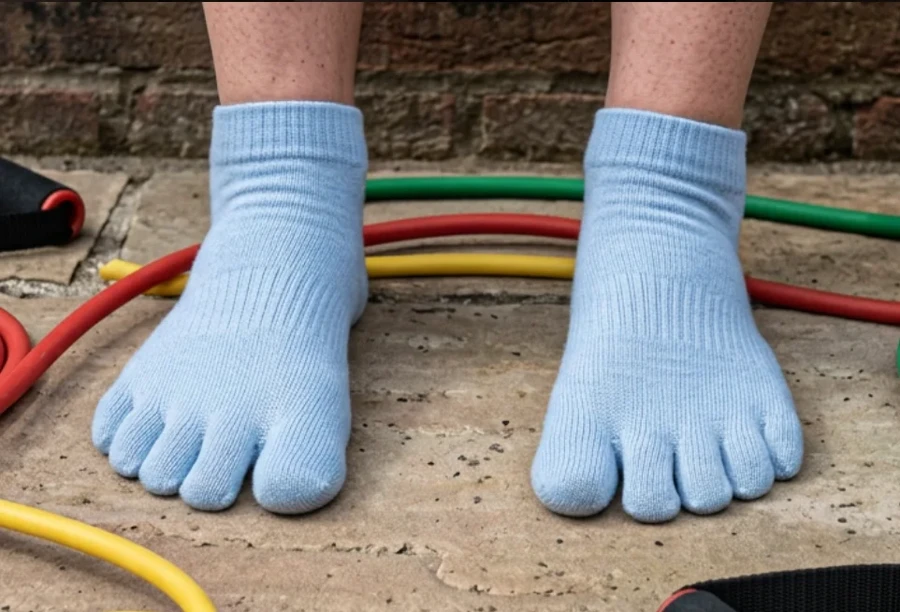
Toe socks.
Balance work and single-leg practice.
◆ ◆ ◆
04Part Four
Know the right (and wrong) tools
Rebuilding your foundation is a step in the right direction, but there's more to it than fixing
your footwear. There is a whole range of equipment that is not worth your investment, and in
many cases that can actually make things worse,
with time.
The good thing is that getting to the root cause of pain and
developing full-body functional fitness
doesn't mean you need a complicated home setup (or even a gym membership).
In fact, you only need three specific things (plus a few optional bonuses) - and they're all in the free Complete Home Gym guide. It's a completely unsponsored breakdown of the only tools I trust in a clinical setting to help people overcome recurring pain, injuries, pelvic floor dysfunction, hypermobility, and a range of other biomechanical health issues.
Functional fitness equipment · Companion Guide
The Complete Home Gym Guide
Everything you need, nothing you don't.
Inside, you'll find not just the right equipment, but also:
Why use these tools rather than others, and what they're for
The features you'll want and which ones to avoid, so you don't buy the wrong kind.
Tested household alternatives you can use any time
Our bodies will form to the molds we give them - and this is especially essential while we are growing
and developing. Small changes have massive impacts for kids.
The essentials for kids' feet
Make sure their shoes are incredibly flexible, never too tight, and always with a wide toe
box.
Keep their toenails trimmed so they aren't forced to alter their step to avoid pain.
Money-saving hack: socks with rubber soles are a fantastic, affordable alternative
to expensive barefoot shoes for fast-growing kids.
Let them spend as much time barefoot as possible, whenever it is safe to do so.
◆ ◆ ◆
06Part Six
What if relief keeps fading?
What lasting change usually takes.
If you've been dealing with pain, tension, weakness, pelvic floor issues, or a body that just
doesn't
feel like it's working right anymore, you've probably already tried a lot. You've probably
already been
through
the
physio, the chiro, other specialists, and got some temporary relief, a list of exercises,
maybe a
few sessions that felt like they helped... until they didn't. And then you're back to square one.
That's exactly where I was before I started down this line of work. And that's when I realized
that it wasn't because I was lazy, broken, or doing it wrong. It's because the traditional
approaches
treat the spot that hurts, not the deeper patterns that put you there in the first
place. Your body is a deeply
interconnected system, and when something's been building for years, you've probably realized a handful
of isolated appointments is not going to undo it.
The reality is that lasting change usually means rebuilding your foundation - how you move, how
you
stand, how your feet, core, pelvis, and nervous system are all working together (or not).
That takes
more than just another appointment. It takes a real plan.
You don't need to figure all of that out today. But here's what I would recommend to you right now:
• Start with the free Complete Home Gym guide. The only tools I trust in a
clinical setting - and everything you need is surprisingly minimal. (Get it here, it's free)
• Book a free call - ask questions, no commitment. See below for more information.
• Check in with our socials for more free resources and upcoming events.
Living with pain is exhausting. Getting help shouldn't be.
Step 1: Book a free 15-minute phone call.
Tell me about your concerns. I'll offer any insights I can, let you know whether - or
how -
I could help, and depending on your situation, may recommend other types of practitioners
who
might be a better fit.
This call could provide you with:
Insight into the causes of your specific pain, injuries, or function concerns - anything
within musculo-skeletal and pelvic health
Guidance on the optimal use of your insurance benefits, and which types of practitioners
could be most beneficial in your case
Lifestyle ergonomics - small changes that can have a lasting positive impact on your
health
Answers to any questions you have, within my scope of practice
An honest answer on whether my services would be a good fit for your needs
Completing the quick
health intake
form
beforehand can help you get the most out of the call.
Step 2: Get a real plan with a destination in mind
Once we find out if working together is the right fit, I'll assess you as a whole, and build
a treatment plan around your specific needs. Then we'll work through it with hands-on
sessions, exercises you can do at home, and ongoing support between visits.
Step 3: Get back to your life!
The goal from day one is lasting change, not repeat visits. Once we finish working together, you'll leave with a real
understanding
of your body, and with the tools to keep it working.
Step one is FREE!Book a free 15-minute phone consultation.